
As our new hometown of Carlinville, Illinois, puts the finishing touches on the decorations for the massive Route 66 Centennial Jubilee this weekend, walking past the local historic storefronts has me thinking about the raw, unpredictable nature of the open road. For a century, the Mother Road has stood as a symbol of American adventure. But during our five years of full-time RV living, we learned that the best stories don’t come from smooth, perfect days—they come from the chaotic detours, the close calls, and the honest moments that happen when you’re towing a home on wheels.

Back when we were navigating our 36-foot Prime Time Crusader fifth-wheel and tracing the western stretches of the highway, our map took us on a massive, wild detour from eastern New Mexico to the Grand Canyon. Getting there was an adventure all its own—complete with high-altitude supply runs, cinematic landscapes, a near-disaster on the asphalt, and a less-than-friendly welcome.
The High-Altitude Supply Detour

Our western journey took a dramatic turn while we were staying at Oasis State Park in eastern New Mexico. Realizing we were about to completely run out of our stash, I convinced “The Man” to make a massive tactical detour. With weed not yet fully accessible along our immediate path, we hung a sharp right and hauled north to Trinidad Lake State Park in Colorado. It was our first legal purchase ever, and we were like kids in a candy store!
But this story isn’t about the purchase; it’s about the journey. We hit up a few dispensaries, stocked up, and secured our cargo before descending back down into New Mexico to stay the night at Route 66 RV Park in Albuquerque.

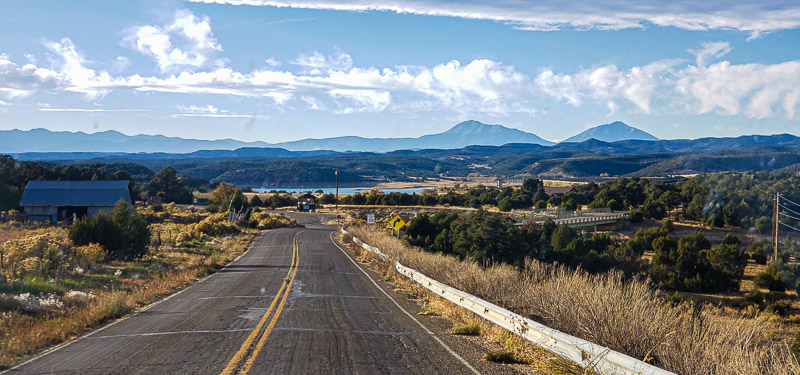
Leaving the city behind and pushing west toward Arizona, the highway transformed completely. The vast mesas, rolling high-desert terrain, and rugged rock formations made us feel like we were driving straight through the classic western video game Red Dead Redemption. It was beautiful, expansive, and utterly surreal to view from the cab.
Because we threw that massive Colorado mountain run into our timeline, we quickly fell behind our original schedule. Pulling over, I called ahead to our next stop, lied through my teeth, and told them we were having unexpected truck trouble. It was a necessary white lie to rework our reservation days—I wanted weed and to see the Grand Canyon. I wasn’t going to disrupt our upcoming bucket-list stay inside at Trailer Village. Frankly, I didn’t mind missing out on walking through the Petrified Forest National Park gates anyway. When you are full-time on the highway, you have tough choices to make, and sometimes you actually see much more right from the truck. “The Man’s” disabilities make it very difficult to do long walking tours, so we always adapted our pace to match the reality of the road.

A Near-Jackknife and a Campground Lecture
When we finally rolled into Holbrook late in the afternoon, the road tried to take us down. Right as we arrived, an SUV carelessly pulled straight out into our path. It was a terrifying, split-second moment where the weight of the trailer began to push, and we almost jackknifed right there on the pavement.
Thanks to “The Man’s” background in the military, he is an absolute master driver. His training kicked in instantly, his hands stayed steady on the wheel, and he managed to maneuver our setup out of harm’s way without a scratch. We avoided a major wreck by the skin of our teeth.

But the stress wasn’t over. Rattled from the near-miss and trying to get parked, we accidentally pulled through the campground going entirely the wrong way in broad daylight. Instead of a warm welcome after a stressful day, we immediately got a stern lecture from a grumpy campground worker who wasn’t thrilled with our late-afternoon navigation choices.
RVer Tip: When towing a fifth-wheel, always visual-map your campground entrance via satellite imagery before pulling in to avoid accidental wrong-way entry. Of course, sometimes this works… and sometimes you still can’t tell a tight turn from a ditch until you’re already in it.

Finding the Wood at OK RV Park
Though we bypassed the actual Petrified Forest park boundary to protect our schedule and accommodate “The Man’s” walking limits, the petrified history came straight to us. We stayed at OK RV Park & Red Rock MHP, and after finally unwinding from the chaotic drive, we saw that we didn’t even need a park pass to see the sights.

The campground itself had beautiful chunks of ancient petrified wood scattered right on the property. This makes it a fantastic destination for RVers because you don’t have to embark on long, grueling hikes to experience the prehistoric geological history of the Southwest. While our clothes spun in the campground laundry room, we spent our afternoon walking around the grounds, looking at the brilliant, fossilized stone logs resting right by our site. I made sure to capture great close-up photos of the colorful wood before we finally hitched back up to head toward the Grand Canyon.

The Ghost of Mid-Century Tourism
Staying overnight in Holbrook exposed us to the raw economic realities of the modern Mother Road. On paper, Holbrook is a living neon monument to the highway’s golden age—from the iconic tepee cabins of the Wigwam Motel to the retro rock shops lining Navajo Boulevard. But pulling our rig through town, the atmosphere felt incredibly quiet, almost completely dead.
The stark reality is that Holbrook was constructed for a transient, mid-century motoring boom. When Interstate 40 bypassed the main drag, it left behind an isolated desert outpost entirely dependent on seasonal tourism. Combined with a shifting industrial landscape as regional coal energy plants transition away, the empty lots and high commercial vacancies give it the eerie vibe of a town fighting to survive purely on nostalgia.

The Pillars of the Midwest
Settling down here in Carlinville, Illinois, has highlighted a completely different side of the Route 66 legacy. Carlinville was only a part of the official highway for four brief years (1926–1930) before a realignment shifted the route east. Because it was spared from building an economic identity around roadside tourist traps, it managed to preserve its foundational roots as a Midwestern agricultural and coal hub.
Today, while Carlinville faces the typical struggles of rural America—updating aging municipal infrastructure and navigating a changing retail market—it is structurally anchored in a way Holbrook simply cannot replicate. Our new home has permanent, stable institutional pillars: the corporate headquarters of Prairie Farms Dairy, the historic Macoupin County Courthouse square, Blackburn College, and the tightly knit neighborhoods surrounding the nation’s largest collection of Sears mail-order homes. Carlinville isn’t just surviving on the memory of the road; it’s utilizing active community revitalization plans to build a functioning, vibrant future.
The Undying Tie to the Mother Road
Missing the national park didn’t mean missing out on Route 66 history. As we celebrate 100 years of the Mother Road at the Carlinville Jubilee back home in Illinois, looking back at our time in Holbrook is a beautiful reminder of what road travel is actually about. It isn’t a sanitized travel brochure. It’s a living timeline of close calls, masterful driving, sneaky dispensary detours, and the incredible, changing landscapes that bind us all together from the Illinois prairies to the Arizona deserts.
Leave a Reply